


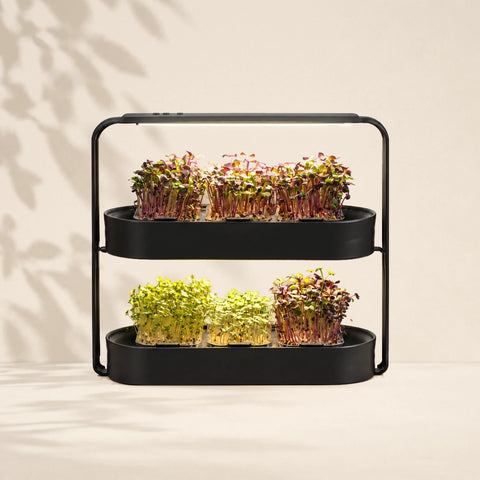





Organic mini red cabbage
Bones + Teeth | Calcium Source (120 mg/100 g) | 6 Organic Seed Pads
- Organic seeds from Italy
- Slightly sweet taste
- Made in Germany
Choose your microgreens supply:

Free shipping from €49 · Delivery in 1–3 business days
- 45-day money-back
- Germination guarantee
- Cancel anytime
Natural supplements
Our organic microgreens are natural supplements in their purest and freshest form.
They are 40 times more nutrient-rich than fully grown vegetables. Vibrant. Powerful. Colorful.
Our organic seeds contain fresh vitamins, minerals and secondary plant compounds – for your health & self-care.
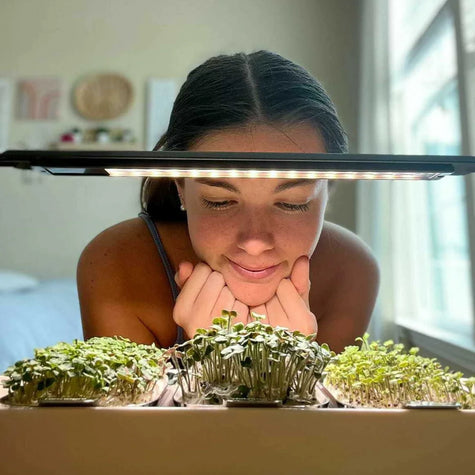
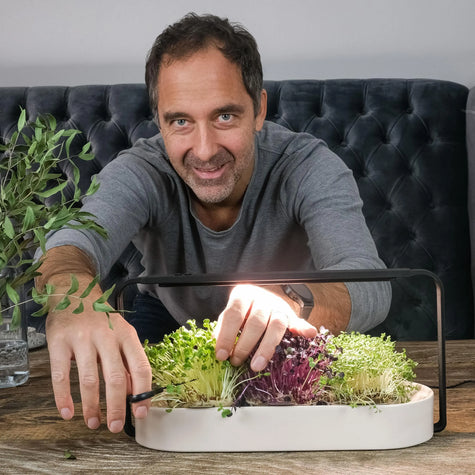
Harvest in just 7 days, fully automated and easy to use. An invitation to bring the good things back into our everyday lives, onto our plates, into our homes.
Product description
Contains ...
- Vitamin K1 : Bone maintenance, supports blood clotting
- Vitamin C : for the immune system, energy metabolism, and nervous system. It supports cells against oxidative stress.
- Folic acid : Supports homocysteine metabolism, mental function, immune system, reduction of tiredness/fatigue and cell division.
- Manganese : Supports the protection of cells from oxidative stress, supports energy metabolism, bone maintenance, and the formation of connective tissue.
- Calcium : Supports bone maintenance, the function of digestive enzymes and contributes to normal muscle function.
Grows within 7 days | 24 micronutrients & minerals | Vegan | Gluten-free | Non-GMO | No fertilizers, pesticides or other harmful additives | 6 pads
Nutrients
Compared to supermarket red cabbage, ingarden's super red cabbage contains:
- 270% more manganese
- 243% more calcium
- 211% more choline
- 200% more lutein
Subscription information
- Save permanently – now and on every future subscription delivery.
- You can cancel your subscription at any time – simply via your account or by email.
- We will remind you by email 5 days before each delivery.
- You remain flexible: You can adjust the delivery interval, variety selection, shipping date and much more at any time.
Taste
They have a crisp, mild flavor and are therefore ideal as a side dish and color accent for savory and sweet dishes.
No commitment
Pause or cancel your subscription anytime in your account or by email.
We’ll remind you 5 days before every delivery. You can change varieties & frequency anytime.
Germination guarantee
If a seed pad ever fails to sprout, we’ll replace it for free.
Just get in touch with our customer service.
Our organic red cabbage is bursting with benefits and can:

support the function of the immune system

promote energy metabolism

Protection against oxidative cell stress

Reduce tiredness and exhaustion

Promoting bone and tooth preservation

support blood clotting

What is the ingarden germination guarantee?
Because our care doesn't end with shipping:
Should your seed pad fail to germinate, we will replace it for you.
Uncompromisingly caring. Radically mindful.
Tess & Christian
(Family business from Berlin)
Nutrition facts
These nutrients can be found in our varieties – clinically tested.
View nutrient table| Recommended daily intake | red cabbage | |
|---|---|---|
| Vitamin E | 12 mg | 1.32 mg (11%) |
| Vitamin K | 75 μg | 15.9 μg (21.2%) |
| Vitamin C | 80 mg | 21.7 mg (27.1%) |
| Vitamin B1 (Thiamine) | 1.1 mg | 0.09 mg (8.2%) |
| Vitamin B2 (Riboflavin) | 1.4 μg | 0.08 μg (5.7%) |
| Vitamin B3 (Niacin) | 16 mg | 0.9 mg (5.6%) |
| Vitamin B6 | 1.4 mg | 0.17 mg (12.1%) |
| Folic acid | 200 μg | 55.8 μg (27.9%) |
| Biotin | 50 μg | 4.79 μg (9.6%) |
| potassium | 2000 mg | 220 mg (11%) |
| calcium | 800 mg | 120 mg (15%) |
| phosphorus | 700 mg | 67 mg (9.6%) |
| magnesium | 375 mg | 38 mg (10.1%) |
| iron | 14 mg | 0.76 mg (5.4%) |
| zinc | 10 mg | 0.7 mg (7%) |
| copper | 1 mg | 0.06 mg (6%) |
| manganese | 2 mg | 0.37 mg (18.5%) |
Key findings
Compared to 100g of raw supermarket red cabbage*, 100g of organic red cabbage microgreens from ingarden contain:
- 270% more manganese
- 243% more calcium
- 211% more choline
- 200% more lutein
- 140% more biotin
- 138% more magnesium
- 59% more folic acid
- 52% more iron
* Source
* Source
The nutritional values of our microgreens may vary as they are a natural product.
| Recommended daily intake | arugula | |
|---|---|---|
| Vitamin E | 12 mg | 0.33 mg (2.8%) |
| Vitamin K | 75 μg | 17.2 μg (22.9%) |
| Vitamin C | 80 mg | 11 mg (13.8%) |
| Vitamin B1 (Thiamine) | 1.1 mg | 0.06 mg (5.5%) |
| Vitamin B2 (Riboflavin) | 1.4 μg | 0.09 μg (6.4%) |
| Vitamin B3 (Niacin) | 16 mg | 0.03 mg (0.2%) |
| Vitamin B6 | 1.4 mg | 0.14 mg (10%) |
| Folic acid | 200 μg | 57.4 μg (28.7%) |
| Biotin | 50 μg | 5.15 μg (10.3%) |
| potassium | 2000 mg | 360 mg (18%) |
| calcium | 800 mg | 42 mg (5.3%) |
| phosphorus | 700 mg | 53 mg (7.6%) |
| magnesium | 375 mg | 33 mg (8.8%) |
| iron | 14 mg | 2.2 mg (15.7%) |
| zinc | 10 mg | 0.8 mg (8%) |
| copper | 1 mg | 0.07 mg (7%) |
| manganese | 2 mg | 0.74 mg (37%) |
Key findings
Compared to 100g of raw supermarket arugula*, 100g of organic arugula microgreens from ingarden contain:
- 57% more iron
- 56% more manganese
- 51% more folic acid
- 24% more lutein
- 13% more choline
* Source
* Source
The nutritional values of our microgreens may vary as they are a natural product.
| Recommended daily intake | broccoli | |
|---|---|---|
| Vitamin E | 12 mg | 0.25 mg (2.1%) |
| Vitamin K | 75 μg | 36.5 μg (48.7%) |
| Vitamin C | 80 mg | 24.1 mg (30.1%) |
| Vitamin B1 (Thiamine) | 1.1 mg | 0.05 mg (4.5%) |
| Vitamin B2 (Riboflavin) | 1.4 μg | 0.07 μg (5.0%) |
| Vitamin B3 (Niacin) | 16 mg | 0.7 mg (4.4%) |
| Vitamin B6 | 1.4 mg | 0.13 mg (9.3%) |
| Folic acid | 200 μg | 33.1 μg (16.6%) |
| Biotin | 50 μg | 2.62 μg (5.2%) |
| potassium | 2000 mg | 250 mg (12.5%) |
| calcium | 800 mg | 65 mg (8.1%) |
| phosphorus | 700 mg | 73 mg (10.4%) |
| magnesium | 375 mg | 45 mg (12%) |
| iron | 14 mg | 0.73 mg (5.2%) |
| zinc | 10 mg | 0.4 mg (4%) |
| copper | 1 mg | 0.05 mg (5%) |
| manganese | 2 mg | 0.7 mg (35%) |
Key findings
Compared to 100g of raw supermarket broccoli*, 100g of organic broccoli microgreens from ingarden contain:
- 424% more biotin
- 169% more manganese
- 150% more magnesium
- 12% more calcium
- 4% more lutein
* Source
* Source
The nutritional values of our microgreens may vary as they are a natural product.
| Recommended daily intake | Kale | |
|---|---|---|
| Vitamin E | 12 mg | 0.08 mg (0.7%) |
| Vitamin K | 75 μg | 9.11 μg (12.1%) |
| Vitamin C | 80 mg | 15.3 mg (19.1%) |
| Vitamin B1 (Thiamine) | 1.1 mg | 0.05 mg (4.5%) |
| Vitamin B2 (Riboflavin) | 1.4 μg | 0.04 μg (2.9%) |
| Vitamin B3 (Niacin) | 16 mg | 0.5 mg (3.1%) |
| Vitamin B6 | 1.4 mg | 0.1 mg (7.1%) |
| Folic acid | 200 μg | 33.8 μg (16.9%) |
| Biotin | 50 μg | 1.89 μg (3.8%) |
| potassium | 2000 mg | 250 mg (12.5%) |
| calcium | 800 mg | 36 mg (4.5%) |
| phosphorus | 700 mg | 39 mg (5.6%) |
| magnesium | 375 mg | 23 mg (6.1%) |
| iron | 14 mg | 0.51 mg (3.6%) |
| zinc | 10 mg | 0.5 mg (5%) |
| copper | 1 mg | 0.04 mg (4%) |
| manganese | 2 mg | 0.6 mg (30%) |
Key findings
Compared to 100g of raw supermarket kale*, 100g of organic kale microgreens from ingarden contain:
- 2213% more choline
- 89% more biotin
- 9% more manganese
* Source
* Source
The nutritional values of our microgreens may vary as they are a natural product.
| Recommended daily intake | Mustard | |
|---|---|---|
| Vitamin E | 12 mg | 0.204 mg (1.7%) |
| Vitamin K | 75 μg | 11.2 μg (14.9%) |
| Vitamin C | 80 mg | 9.36 mg (11.7%) |
| Vitamin B1 (Thiamine) | 1.1 mg | 0.04 mg (3.6%) |
| Vitamin B2 (Riboflavin) | 1.4 μg | 0.07 μg (5%) |
| Vitamin B3 (Niacin) | 16 mg | 0.1 mg (0.6%) |
| Vitamin B6 | 1.4 mg | 0.1 mg (7.1%) |
| Folic acid | 200 μg | 33.1 μg (16.6%) |
| Biotin | 50 μg | 7.24 μg (14.5%) |
| potassium | 2000 mg | 240 mg (12%) |
| calcium | 800 mg | 38 mg (4.8%) |
| phosphorus | 700 mg | 58 mg (8.3%) |
| magnesium | 375 mg | 31 mg (8.3%) |
| iron | 14 mg | 0.95 mg (6.8%) |
| zinc | 10 mg | 0.81 mg (8.1%) |
| copper | 1 mg | 0.08 mg (8%) |
| manganese | 2 mg | 0.44 mg (22%) |
Key findings
Compared to 100g of processed yellow mustard*, 100g of organic mustard microgreens from ingarden contain:
- 30-20% more Vitamin C
- 708% more lutein
- 700% more vitamin K1
- 373% more folic acid
- 171% more choline
- 45% more biotin
* Source
The nutritional values of our microgreens may vary as they are a natural product.
| Recommended daily intake | radish | |
|---|---|---|
| Vitamin E | 12 mg | 0.58 mg (4.8%) |
| Vitamin K | 75 μg | 61.4 μg (81.9%) |
| Vitamin C | 80 mg | 14.6 mg (18.3%) |
| Vitamin B1 (Thiamine) | 1.1 mg | 0.08 mg (7.3%) |
| Vitamin B2 (Riboflavin) | 1.4 μg | 0.06 μg (4.3%) |
| Vitamin B3 (Niacin) | 16 mg | 0.5 mg (3.1%) |
| Vitamin B6 | 1.4 mg | 0.16 mg (11.4%) |
| Folic acid | 200 μg | 39.6 μg (19.8%) |
| Biotin | 50 μg | 2.88 μg (5.8%) |
| potassium | 2000 mg | 220 mg (11%) |
| calcium | 800 mg | 32 mg (4%) |
| phosphorus | 700 mg | 51 mg (7.3%) |
| magnesium | 375 mg | 33 mg (8.8%) |
| iron | 14 mg | 0.48 mg (3.4%) |
| zinc | 10 mg | 0.4 mg (4%) |
| copper | 1 mg | 0.04 mg (4%) |
| manganese | 2 mg | 0.47 mg (23.5%) |
Key findings
Compared to 100g of raw supermarket radish*, 100g of organic radish microgreens from ingarden contain:
- 29900% more lutein
- 5700% more vitamin E
- 4623% more Vitamin K1
- 581% more manganese
- 476% more biotin
- 313% more magnesium
- 222% more choline
- 65% more folic acid
- 20% more iron
* Source
* Source
The nutritional values of our microgreens may vary as they are a natural product.
| Recommended daily intake | Pak Choi | |
|---|---|---|
| Vitamin E | 12 mg | - |
| Vitamin K | 75 μg | - |
| Vitamin C | 80 mg | - |
| Vitamin B1 (Thiamine) | 1.1 mg | - |
| Vitamin B2 (Riboflavin) | 1.4 μg | - |
| Vitamin B3 (Niacin) | 16 mg | - |
| Vitamin B6 | 1.4 mg | - |
| Folic acid | 200 μg | - |
| Biotin | 50 μg | - |
| potassium | 2000 mg | 284 mg (14.2%) |
| calcium | 800 mg | 58 mg (7.3%) |
| phosphorus | 700 mg | 59 mg (8.4%) |
| magnesium | 375 mg | 31 mg (8.3%) |
| iron | 14 mg | 0.49 mg (3.5%) |
| zinc | 10 mg | 0.3 mg (3%) |
| copper | 1 mg | 0.05 mg (5%) |
| manganese | 2 mg | 0.29 mg (14.5%) |
| Recommended daily intake | Mizuna mustard | |
|---|---|---|
| Vitamin E | 12 mg | - |
| Vitamin K | 75 μg | - |
| Vitamin C | 80 mg | - |
| Vitamin B1 (Thiamine) | 1.1 mg | - |
| Vitamin B2 (Riboflavin) | 1.4 μg | - |
| Vitamin B3 (Niacin) | 16 mg | - |
| Vitamin B6 | 1.4 mg | - |
| Folic acid | 200 μg | - |
| Biotin | 50 μg | - |
| potassium | 2000 mg | 354 mg (17.7%) |
| calcium | 800 mg | 48 mg (6%) |
| phosphorus | 700 mg | 57 mg (8.1%) |
| magnesium | 375 mg | 29 mg (7.7%) |
| iron | 14 mg | 0.57 mg (4.1%) |
| zinc | 10 mg | 0.28 mg (2.8%) |
| copper | 1 mg | 0.06 mg (6%) |
| manganese | 2 mg | 0.36 mg (18%) |
Frequently Asked Questions
Our seeds come from the Emilia-Romagna region of Italy and the Netherlands. Ingarden seeds are sourced exclusively from trusted and certified organic growers. This means that our seeds are certified organic by accredited authorities who verify that no artificial fertilizers, herbicides, or pesticides are used. Each seed batch is tested by laboratories for microbiological safety according to HACCP standards, a guaranteed germination rate of 90%, as well as for appearance and integrity. The seeds are processed only by certified organic producers who avoid cross-contamination and adhere to the highest hygiene standards.
Our microgreens reach their highest nutrient density after 7 to 14 days of growth. Therefore, we recommend harvesting them completely within this period. After approximately 14 days, the young vegetables leave the microgreen stage. From then on, the desired quality and nutrient density can no longer be guaranteed.
arugula
High in lutein (4.42mg/100g), a natural antioxidant that is believed to play an important role in protecting eye health 👁️
broccoli
High in vitamin C (24.1mg/100g), which supports the immune system and normal cognitive function 🧠
Kale
Rich in manganese (1.98mg/100g), which prevents stress and increases energy 💪
Mustard
Rich in vitamin B8 (biotin) (7.24 μg /100g), which supports healthy hair and skin 💅
radish
Rich in vitamin K1 (61.4μg/100g), which supports the growth of bones and teeth and activates the proteins for blood clotting 🩸
red cabbage
Rich in calcium (120mg/100g), which supports healthy bones and teeth 🦷🦴
It's important that you always clean your indoor garden with clean hands to avoid potential contamination. Airborne particles can also lead to mold growth.
No, ingarden microgreens do not attract insects. However, make sure you change the water and clean the ingarden after each harvest.
Seed germination is a complex process influenced by various factors such as light, water, and temperature. Always ensure your seed pads are moist and that there is enough water in the tray. Clean the wicks of any old roots before the next use. If germination is uneven, we recommend using germination trays for the first 2-3 days to facilitate the process. Learn more about our germination trays in our shop. For further questions, please contact our customer service at info.de@ingarden.com .
Our certified organic seed pads are made from biodegradable cellulose, therefore the pads are completely biodegradable and compostable.
Different types of microgreens have varying heights and growth rates due to variations in their genetics and growth patterns. A microgreen's height can also depend on factors such as the amount of light, temperature, and humidity it receives. Some microgreen varieties, like mustard and radish, tend to grow taller than others, such as broccoli and red cabbage, which are typically shorter. The growth rate of microgreens can also influence their height, as some varieties grow faster or slower than others.
If you are having problems with germination or growth, we have several resources for you:
- Check out our instruction page, which contains helpful tips.
- Send us an email to info.de@ingarden.com and, if possible, attach a photo so that our customer service can look at your case.
- Take advantage of our germination guarantee if your seed pads don't germinate.
Entdecke unser Sortiment